
Resilience is often described as ‘bouncing back’, but for children (and for adults), it’s really about growing stronger. It’s not something that appears after one difficult moment; it develops slowly, through repeated real-life experiences, especially on the days that feel hardest.
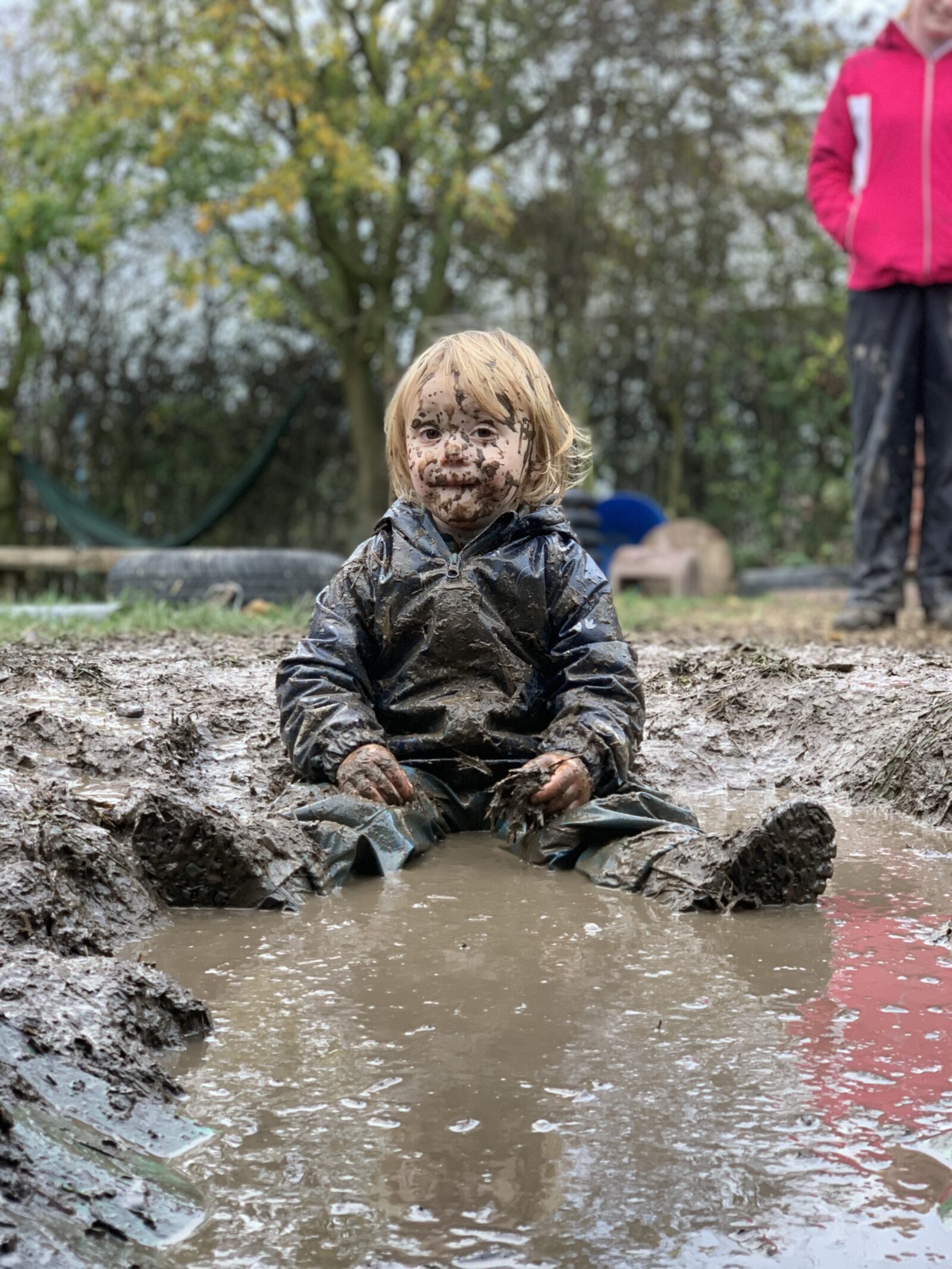
At Growing Wild, resilience is built on cold, wet, muddy days. Slippery ground, soggy gloves and cold toes are not inconveniences to rush through; they are part of the learning; these conditions gently ask children to tune into their bodies, notice how they feel, and work out what helps. Do I move more to stay warm? Do I slow down on the mud? Do I ask for help, or try again myself?
Balancing on a wet log, sliding down a muddy bank, or choosing to keep playing when it’s raining builds more than physical skill; these moments quietly develop confidence, flexibility and self-belief. Children learn that discomfort isn’t dangerous, that uncertainty can be managed, and that they are capable of adapting. Over time, these small experiences add up to a strong inner sense of “I can cope with this.”
Outdoor learning specialist Jan White reminds us that supported physical risk is essential for healthy development. Moving on uneven, unpredictable ground builds coordination, balance and body awareness, but it also strengthens emotional skills such as persistence and self-regulation. When children practise managing physical challenge, they are also practising how to manage frustration, disappointment and change – skills that transfer beyond childhood.
Research into resilience by Michael Ungar and Tim Gill supports this idea. Resilience develops best when children experience both challenge and support. It isn’t about avoiding difficulty or smoothing the path ahead, it’s about knowing that someone steady is nearby, someone who believes you can try again.
This is where the adult role really matters. Our job isn’t to fix every wobble or remove every struggle, it’s to stay calm and present. When a child slips in the mud or a carefully built structure collapses, we don’t need to rush in with solutions. Often, a quiet pause, a reassuring presence, and a simple question like “What could you try next?” does far more. That steady support tells children they are trusted, capable, and safe enough to keep going.
And the same is true for staff. Working outdoors in all weathers takes resilience, teamwork and emotional steadiness. Cold mornings, persistent rain, and changing muddy clothes is physically and emotionally demanding. Staff resilience grows in the same way children’s does, when people feel understood, trusted and supported, especially on the toughest days. When leaders notice effort, acknowledge challenge, and create space for honesty, teams are better able to cope, adapt and keep going together. Shared laughter in the rain, a warm drink at the right moment, and knowing you’re not expected to be ‘fine’ all the time make a real difference.
At Growing Wild, we see resilience not as toughness, but as the capacity to cope, to adapt, and to carry on with support. It’s built in muddy boots, cold fingers, steady relationships and calm leadership.
One muddy day at a time, children and adults alike grow stronger!
References and Further Reading
| White, J. (2015). Playing and Learning Outdoors. Routledge. Gill, T. (2007). No Fear: Growing Up in a Risk-Averse Society. Calouste Gulbenkian Foundation. Ungar, M. (2018). Change Your World: The Science of Resilience and the True Path to Success. Early Education (2021). Building Resilience Through Play. |